Vacuum Casting
Vacuum casting is the industry-standard process for manufacturing high-performance nickel-based superalloys. Conducted under controlled vacuum conditions, the process minimizes gas contamination and oxidation, ensuring exceptional alloy purity, precise chemistry, and consistent metallurgical quality.
Vacuum Casting of Nickel-Based Superalloys
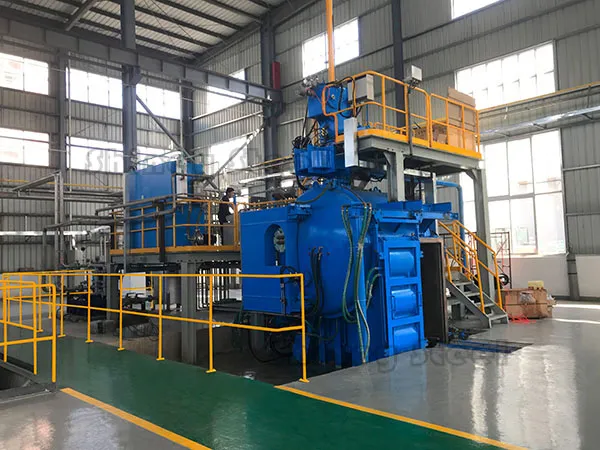
Vacuum casting is a highly specialized manufacturing process used for producing high-performance nickel-based superalloys and precision cast components. By melting and pouring alloys under high-vacuum conditions, the process effectively eliminates contamination from oxygen, nitrogen, and hydrogen, preventing oxidation of reactive alloying elements such as aluminum and titanium. This results in superior metallurgical cleanliness, precise chemical composition control, enhanced microstructural uniformity, and improved mechanical properties.
At Shiney Steel, we utilize advanced Vacuum Induction Melting (VIM) and vacuum casting technologies to manufacture premium nickel-based superalloy master alloys, including Inconel 713C, IN738, IN792, K424, K438, and MAR-M247. Our vacuum casting capabilities ensure reliable quality and consistency for demanding aerospace, gas turbine, turbocharger, power generation, and investment casting applications.
Nickel-Based Superalloy Master Alloys We Supply
Our vacuum melting and casting capabilities cover a broad range of nickel-based superalloys, including:
Nickel-Based Cast Superalloys
-
Inconel 713C (IN713C)
-
Inconel 738 (IN738)
-
Inconel 792 (IN792)
-
K424
-
K438
-
MAR-M247
-
Custom Nickel-Based Superalloys
Manufacturing Capabilities
-
Vacuum Induction Melting (VIM)
-
Vacuum Casting
-
Master Alloy Production
-
Custom Alloy Development
-
Precision Chemical Composition Control
-
Metallurgical Testing & Certification
-
OEM & Customized Production
We provide reliable nickel-based superalloy master alloys for aerospace, power generation, turbocharger, investment casting, and high-temperature industrial applications worldwide.
Vacuum Induction Melting (VIM) Technology
Vacuum Induction Melting is the preferred production route for high-performance nickel-based superalloy master alloys. The VIM furnace integrates vacuum melting, electromagnetic stirring, refining, composition adjustment, and vacuum pouring into a single controlled process.
Under high-vacuum conditions, the furnace effectively removes dissolved gases such as oxygen, nitrogen, and hydrogen while preventing oxidation of highly reactive alloying elements like aluminum and titanium. This results in superior alloy purity and precise chemical composition control.
Key benefits of VIM technology include:
-
High-purity molten metal
-
Accurate alloy chemistry control
-
Reduced gas content
-
Improved metallurgical cleanliness
-
Excellent compositional homogeneity
-
Consistent casting quality
Manufacturing Process of Inconel 713C Master Alloy
1. Raw Material Preparation
Premium-grade raw materials, including electrolytic nickel, chromium, cobalt, molybdenum, niobium, and master alloys containing aluminum and titanium, are carefully inspected and cleaned before charging.
Surface contaminants, moisture, rust, and oils are removed to prevent impurity introduction during melting. Materials are weighed according to the specified Inconel 713C composition requirements before being loaded into the crucible.
After charging, the furnace chamber is sealed and evacuated to the required vacuum level.
2. Vacuum Induction Melting
Melting Stage
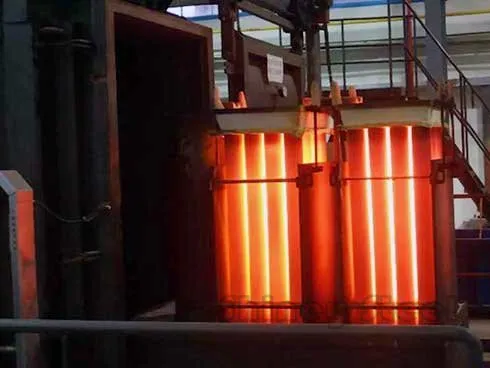
An alternating electromagnetic field generated by the induction coil heats the charge materials rapidly and efficiently. The furnace temperature is gradually increased until all materials are fully melted.
During melting, electromagnetic stirring promotes alloy homogenization and minimizes chemical segregation.
Refining Stage
The molten alloy is held under high-vacuum conditions to remove dissolved gases and undesirable impurities.
Vacuum refining significantly reduces oxygen, nitrogen, and hydrogen levels, resulting in a cleaner and more stable alloy melt.
Composition Adjustment
After refining, samples are extracted for spectrometric analysis.
Based on the analytical results, minor additions of aluminum, titanium, and other alloying elements are made to achieve the target chemistry. Sampling and testing are repeated until the composition fully complies with Inconel 713C specifications.
3. Vacuum Casting and Solidification
Once the melt reaches the required chemistry and pouring temperature, the alloy is cast under vacuum or inert atmosphere protection.
The molten metal is carefully poured into preheated molds to ensure smooth filling and minimize turbulence and oxidation.
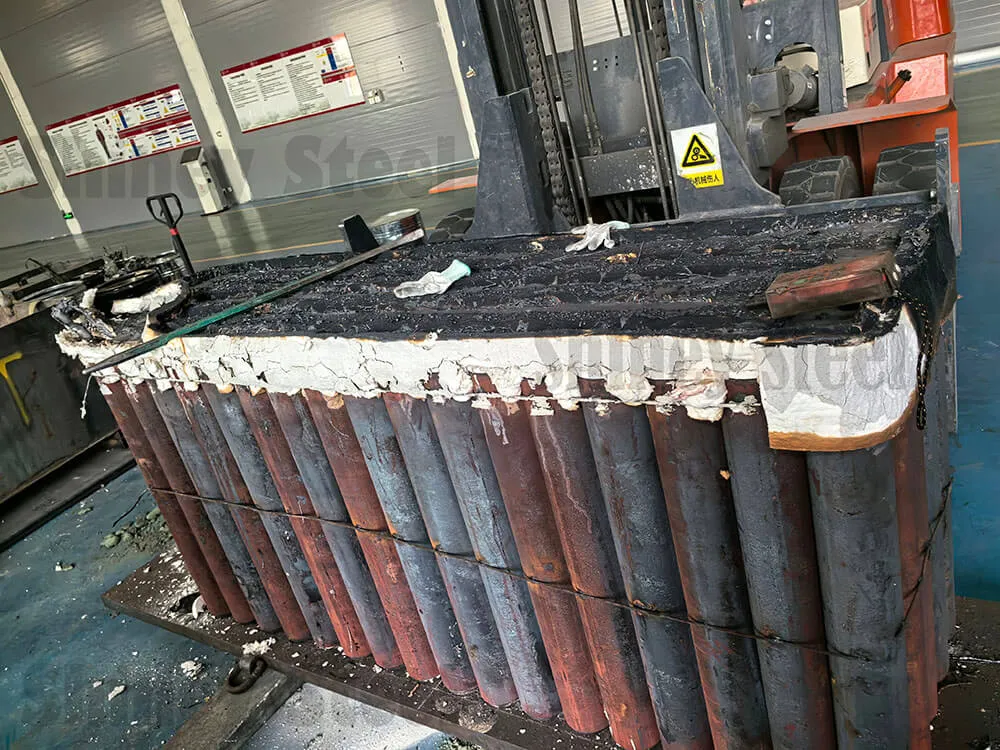
Controlled solidification techniques are employed to reduce shrinkage defects and improve internal soundness. Thermal insulation materials may be applied to riser sections to optimize solidification behavior and minimize porosity formation.
After complete cooling, the cast master alloy ingots are removed from the molds for further processing.
4. Finishing and Quality Inspection
Following casting, the ingots undergo surface cleaning, riser removal, and dimensional cutting according to customer requirements.
Typical master alloy ingots are supplied in cylindrical form and are suitable for subsequent remelting processes such as investment casting, directional solidification, or single-crystal casting.
Comprehensive quality control procedures include:
Chemical Composition Analysis
Verification using optical emission spectroscopy (OES).
Metallographic Examination
Macrostructure and microstructure evaluation to identify segregation, inclusions, and structural defects.
Defect Inspection
Assessment for porosity, cracks, shrinkage, and other casting imperfections.
Mechanical Property Testing
Optional testing according to customer specifications and industry standards.
Only fully qualified products proceed to packaging and shipment.




 86-18666626534
 8618666626534
 sales@shineycast.com
 English
 Русский язык